The Hidden Liability Lurking in Your Oil Room
Oil waste removal is one of those back-of-house tasks that can quietly put your whole restaurant at risk. During a packed fall dinner rush in Los Angeles, one rushed fryer oil change or one small spill in the oil room could turn into a workers’ comp claim, a fire hazard, or a shutdown right when you are slammed with guests.
Most owners put a lot of energy into food safety, health inspections, and guest experience. That is smart. But when oil waste removal safety is treated like an afterthought, the risk does not stay in the oil room. It spreads into insurance costs, staff injuries, plumbing problems, and surprise downtime.
At JR Grease Services, we work with commercial kitchens across the Los Angeles area, so we see what happens when oil waste is not handled in a safe and steady way. The good news is that with some simple changes and the right partner, this is one risk you can control.
What You Do Not See About Used Oil Hazards
Used cooking oil is not just messy; it brings hidden hazards that are easy to miss when things get busy.
Slip, trip, and fall risks show up in quiet ways, such as:
- Micro-slick floors from tiny oil drips along the path from fryers to storage
- Floor mats that are soaked with oil and no longer grip the floor
- Oil tracked from the kitchen into dish areas or even the dining room
The surface might not look wet, but a thin film of oil is enough to send a worker to the ground. One quick fall can mean medical bills, staff shortages, and an OSHA visit.
Fire and heat hazards are another blind spot. Some common issues are:
- Hot oil transferred too early and stored before it has cooled enough
- Collection containers tucked too close to heat sources or electrical panels
- Old plastic or damaged containers that are not suited for hot oil
Used oil also harms parts of your building you cannot see. When oil goes where it should not, it can:
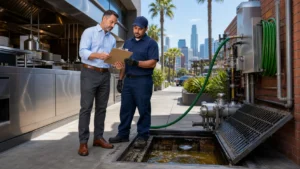
- Cool and solidify inside pipes, leading to slow or blocked drains
- Overwhelm grease traps and strain sewer lines
- Soak into floors or subfloors around fryers and oil rooms
All of this adds up to real business impact. You can face OSHA violations, higher insurance premiums, emergency closures if drains back up during the holiday rush, and unhappy staff who feel unsafe at work.
Where Oil Waste Removal Goes Wrong in Real Kitchens
Even in well-run restaurants, small shortcuts around oil waste removal can stack up into big trouble.
We often see handling mistakes like:
- Carrying open buckets or pots of hot oil through tight spaces
- Overfilling bins so oil spills over when lids are closed
- Pouring hot oil too fast into funnels or containers that cannot handle the flow
- Using makeshift funnels or tools that bend, break, or splash
Equipment problems make everything worse. A safe routine can be undone by:
- Cracked, dented, or rusted barrels and containers
- Lids that do not seal, so oil splashes out or fumes build up
- Unmarked containers that confuse staff about what goes where
- No secondary containment, so one overflow spreads across the floor
Then there is scheduling. When oil waste removal is not planned out, you may be dealing with:
- Infrequent pickups that leave containers near or past capacity
- Last-minute calls during the busiest nights of fall
- Missed services around holidays when staff is already stretched
Fall in Los Angeles brings longer hours, heavier orders, takeout surges, and more seasonal staff who may not know your safety rules. That extra pressure makes it even easier for small oil tasks to slide until they become a real issue.
Compliance, Codes, and the Cost of Getting It Wrong
Oil waste removal touches more rules and codes than most people think. Local fire codes care about how combustible materials are stored. Health departments care how you handle grease and oil and how clean those areas stay. Outdoor oil spills can raise stormwater concerns if they reach drains.
Oil that is poured where it should not go does not just disappear. It affects:
- Grease traps, which can overload and fail if too much oil hits them
- Sewer lines, where hardened grease can cause blockages
- Compliance checks, where patterns of poor handling can lead to fines
The real cost of non-compliance shows up in many ways:
- Emergency plumbing jobs during peak times
- Overtime for late-night cleanup crews
- Service interruptions that turn into bad online reviews
- Insurance deductibles when claims come from slips, fires, or water damage
Good records are one of your best protections. It helps to keep:
- Service logs for used cooking oil pickups
- Manifests that show how and when oil is collected
- Grease trap maintenance records that match what you say during inspections
When an inspector or insurance reviewer asks questions, being able to show a clear, steady record of safe oil handling can protect your business.
Building a Safer Oil Waste Removal Routine
A safer routine does not have to be complicated. What matters most is that it is clear, repeatable, and used by everyone, every day.
A basic process for used oil can look like this:
- Let fryers cool to a safe temperature before draining
- Use proper tools for draining and transporting oil, never open buckets
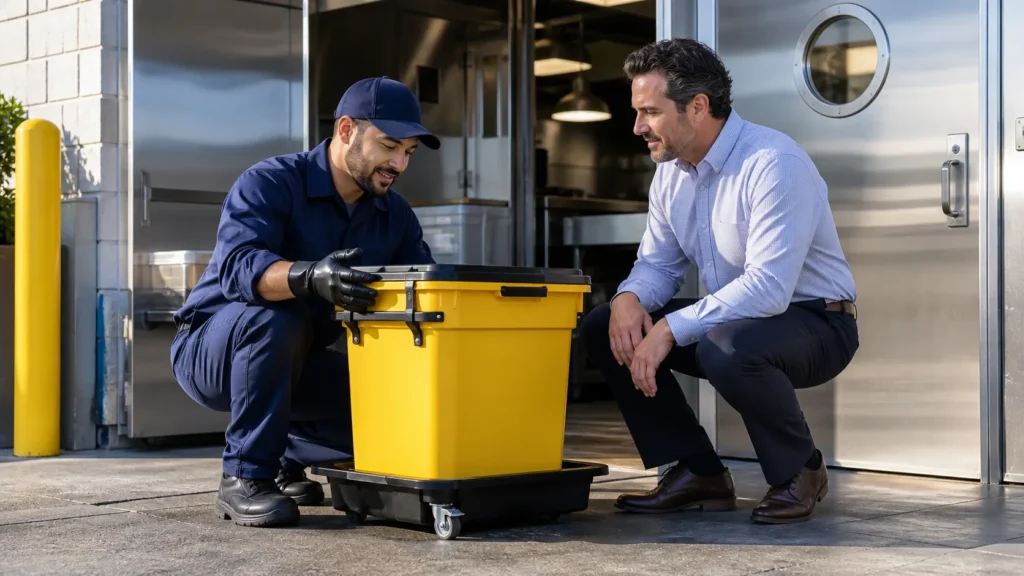
- Transfer oil slowly into secure, labeled containers
- Store containers in a set area with good access and clear floors
Training is just as important as the process itself, especially as you bring on seasonal staff or new hires. Helpful steps include:
- Adding oil safety to every new staff orientation
- Posting simple visual guides near fryers and oil storage areas
- Doing quick pre-shift huddles on busy holiday days to review who handles oil and how
Professional partners play a big role too. A strong grease management partner can help with:
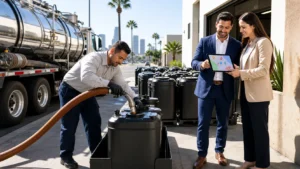
- Scheduled used cooking oil pickups that match your volume
- Secure containers that are designed for kitchen use
- Grease trap maintenance tied in with oil collection
- Emergency support when there is a backup or spill
When all of this is in place before the fall holiday rush, you get fewer last-minute crises and more time to focus on guests and food.
Turn Oil Waste From Risk to Revenue Protection
Oil waste removal will always be part of running a restaurant kitchen. The choice is whether it stays a quiet, growing risk or becomes a controlled part of your safety plan that protects your revenue.
A simple pre-holiday safety audit can help. Walk your space and look at:
- The path from fryers to oil storage
- The condition and labeling of your containers
- How confident your staff feels about the process
- Your pickup schedule and how it lines up with busy nights
It also helps to take a hard look at your current vendors. Ask if they support you with safety tips, compliance-friendly documentation, and reliable scheduling, or if they only show up to haul oil when the bin is full.
At JR Grease Services, we focus on grease management, used cooking oil collection, and kitchen plumbing support for commercial kitchens around Los Angeles. When oil waste removal is handled safely and on schedule, your team can move faster, your plumbing works better, and your doors are more likely to stay open through the busiest season.
Protect Your Kitchen With Reliable Oil Waste Solutions
Keep your commercial kitchen compliant and running smoothly by letting JR Grease Services handle your oil waste removal. We provide timely, reliable pickups so you can focus on your operations instead of worrying about storage, spills, or violations. If you are ready to set up a regular service schedule or have questions about a custom solution, contact us today.