Prevent Holiday Backups Before They Disrupt Service
A grease trap pump-out and hydro-jetting can both help protect your kitchen, but they clear different parts of the system. Knowing which service fits the problem can save you from prolonged backups, unpleasant odors, and interruptions during a busy shift.
Late October is a smart time to look at grease management before holiday parties, catering orders, and heavier dishwashing begin. More cooking and more wastewater put extra strain on traps, interceptors, and drain lines. We often find that a full grease trap gets mistaken for a clogged drain, or a clogged drain gets blamed on the trap. Choosing the wrong service can leave the real problem behind.
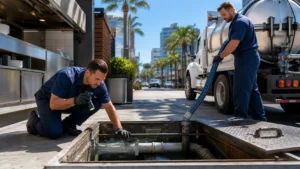
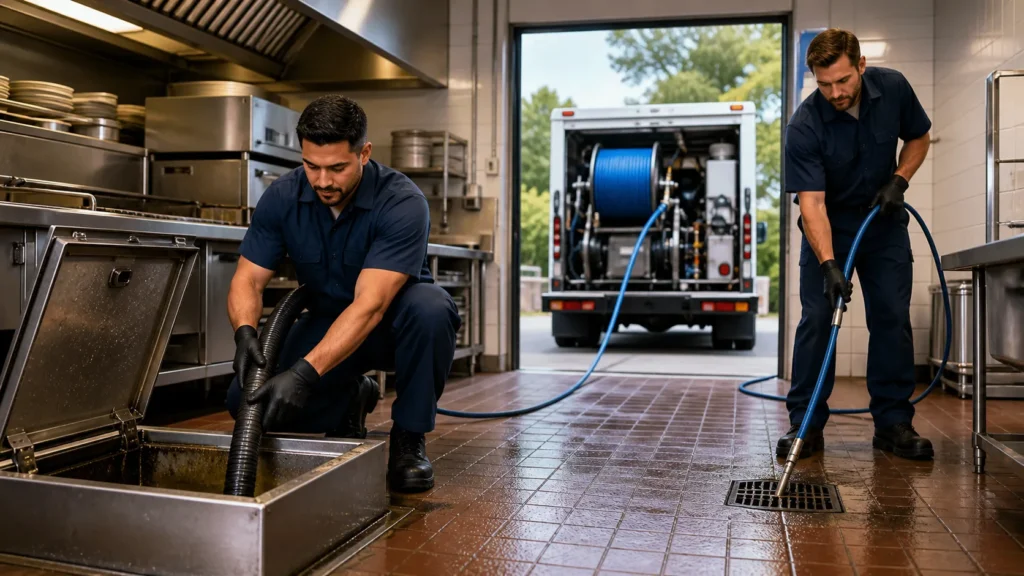
A grease trap pump-out removes the collected fats, oils, grease, wastewater, and solids inside the grease-control device. Hydro-jetting uses controlled high-pressure water to clear buildup and blockages inside kitchen drain lines. Sometimes one service is enough. In other cases, both are needed to get the kitchen flowing properly again.
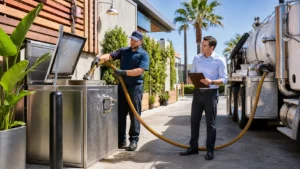
We support food-service operations throughout Los Angeles, Orange, San Bernardino, and San Diego counties, including 24-hour emergency assistance when a grease or plumbing issue puts service at risk.
What a Grease Trap Pump-Out Removes
Your grease trap or interceptor is designed to hold back grease before it travels farther into the plumbing system. As wastewater cools and separates inside the unit, grease rises while heavier food particles and sludge settle below. Over time, those layers take up more and more space.
Once the trap is nearing capacity, it cannot capture incoming grease as effectively. That can lead to odors, overflow concerns, and grease moving into connected plumbing lines. A grease trap pump-out focuses on clearing out what has collected inside the trap or interceptor so it can do its job again.
During service, we remove the accumulated contents and clean accessible interior areas as appropriate. The purpose is to restore available capacity in the grease-management device. Pumping a trap is not the same as cleaning the full length of a kitchen drain line, which is why a pump-out may not resolve a separate clog farther down the plumbing.
Warning signs that may point to a needed pump-out include:
- Visible grease buildup inside or around the trap
- Strong, unpleasant odors near the grease-control equipment
- Overflowing contents or wastewater that is not moving through properly
- Missed maintenance intervals or a trap that appears close to full
- Increased kitchen volume before holiday events or seasonal catering
Regular service is especially helpful before your kitchen takes on more holiday traffic. Waiting until a trap is completely full can turn a planned maintenance visit into a disruptive problem during service.
When Hydro-Jetting Restores Slow Kitchen Drains
Hydro-jetting is a plumbing-line cleaning service. Instead of removing material from inside the grease trap, it sends high-pressure water through the drain line to break apart and flush away grease, food residue, soap buildup, sediment, and certain blockages.
A simple opening through a clog may get water moving for a short time, but grease can remain stuck along pipe walls. Hydro-jetting is intended to clean the inside of the line more thoroughly, helping remove the buildup that keeps causing slow drainage and repeat backups.
Drain-line symptoms can look different from a full grease trap. You may notice:
- Sinks that drain slowly during prep or dishwashing
- Floor drains with standing water nearby
- Gurgling sounds from sinks or drains
- Recurring clogs that keep coming back
- Backups that continue even after a recent grease trap pump-out
The right pressure and cleaning approach depend on the pipe material, the condition of the line, and where the blockage is located. For that reason, we recommend professional evaluation rather than guessing at the cause. Hydro-jetting is powerful equipment, and the service should match the condition of your kitchen plumbing.
Match the Service to the Source of the Blockage
The easiest way to think about the difference is this: a grease trap pump-out clears the container that captures grease, while hydro-jetting clears the pipe that carries wastewater away. Both matter, but they are not interchangeable.
If your trap or interceptor is overdue, visibly full, giving off strong odors, or struggling to hold incoming wastewater, pumping the unit is usually the first step. Removing its accumulated contents gives the device room to separate grease from wastewater again.
On the other hand, a recently serviced trap that is not near capacity may point to a different issue. When sinks remain slow, floor drains back up, or dishwashing triggers water problems, grease and debris may be coating the connected drain line. Hydro-jetting targets that pipe buildup.
High-volume periods can create a combination problem. A trap may be full while the drain line also has layers of grease and food debris restricting flow. In that situation, pumping only the trap may not solve the slow drain, and hydro-jetting the line alone may leave an overfilled interceptor in place.
When we assess the issue, service history helps. Let us know when the trap was last cleaned, when the drainage trouble started, which fixtures are affected, and whether the issue gets worse during dishwashing or peak kitchen activity. Those details help us identify whether the problem is in the trap, the line, or both.
Schedule the Right Service Before Holiday Volume Builds
Before holiday demand ramps up, review the date of your last grease trap service and watch for early warning signs. If your kitchen has recurring slow drains, do not wait for a complete backup to find out whether the line needs attention. A planned evaluation gives you a better chance to address buildup before it disrupts staff, guests, and service.
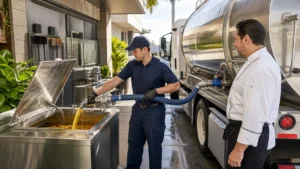
Along with grease trap and interceptor cleaning and kitchen plumbing support, we handle used cooking oil collection and fat and bone collection. Used cooking oil collection does not cost restaurants, and customers producing 100 gallons or more per month may qualify for a rebate.
The practical takeaway is simple: match the service to the source. A full trap needs a grease trap pump-out, a restricted drain line may need hydro-jetting, and a neglected system may need both services to keep wastewater moving smoothly through the holiday rush.
Keep Your Kitchen Systems Ready
JR Grease Services helps restaurants stay ahead of buildup with reliable grease trap pump-out service tailored to your operation. Our team can assess your maintenance needs and help keep your plumbing equipment in working order. To schedule service or discuss your facility, contact us today.