Turn Grease Hotspots Into a Safer, Cleaner Kitchen
Grease builds up fast in a busy Los Angeles kitchen, especially as we move into holiday parties, catering, and big group dinners. Floors get slick, hoods collect sticky film, traps fill up, and drains start to slow down. All of that hurts safety, food quality, and plumbing, and it can sneak up on you if you are not watching it closely.
A simple 30-day grease control audit gives your team a clear way to see where grease is collecting and how well your cleaning plan is working. Instead of guessing, you measure your hotspots, track what you see, then make smart changes. Daily cleaning still happens, but now it is backed by real notes, photos, and scores that any manager can understand.
As a grease management partner serving restaurants across Los Angeles, we focus on used cooking oil, grease traps and interceptors, and kitchen plumbing. This kind of audit fits right beside your daily cleaning and any restaurant cleaning services in Los Angeles you already use, so everything works together instead of in separate boxes.
Why LA Restaurants Need a 30-Day Grease Audit
From October through the end of the year, many LA kitchens run longer hours with heavier fryer use. There are more big reservations, more delivery orders, more catering trays going out the door. With staff rotating, training new hires, and trying to keep up, it is easy for cleaning short cuts to sneak in, especially around grease.
Grease hotspots are not just annoying, they create real business problems:
- Floors: slippery spots, sticky patches, and hidden grease under equipment can lead to slips and near misses.
- Hoods and filters: buildup raises fire risk and can hurt air quality over the line.
- Traps and drains: clogs, slow drains, and backups can shut down a station or even your entire kitchen.
- Odors: foul smells from traps or drains can drift into the dining room and annoy guests.
In the Los Angeles area, there is also strong attention on FOG, which stands for fats, oils, and grease. Health inspectors, city agencies, and landlords all expect you to keep grease under control and out of the sewer system. A 30-day audit gives you written notes, dates, and observations that help show you are taking grease control seriously, not just reacting when something breaks.
Set up Your Grease Control Baseline in One Week
The first week is about seeing your kitchen clearly. We start by mapping grease hotspots. Walk the whole back of house and mark:
- Line and prep floors, including around fryers and ranges
- Cookline hoods, filters, and the wall above equipment
- Under equipment, like under fryers, ovens, and lowboys
- Dish area floors, walls, and sprayer zone
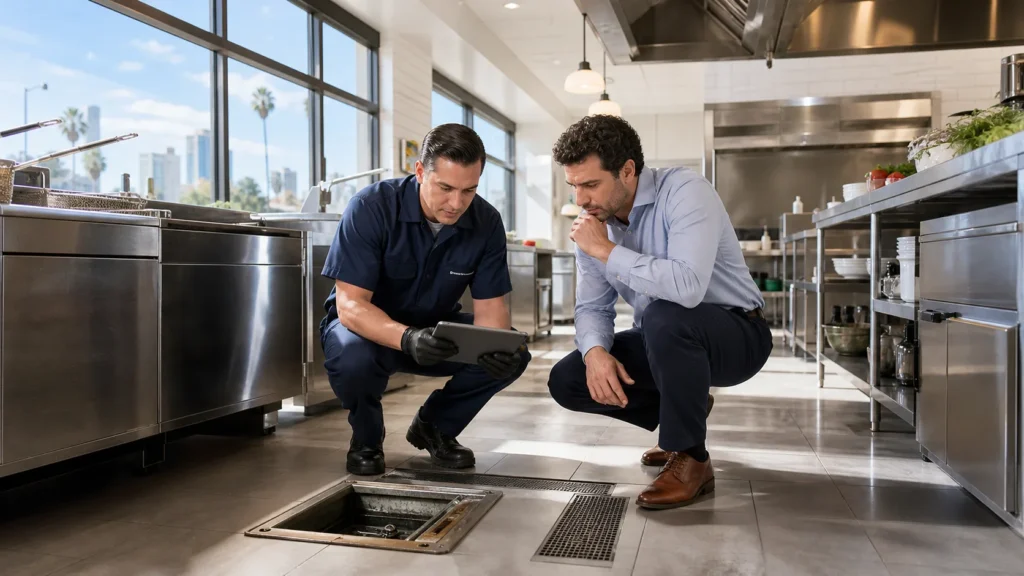
- Floor drains and trench drains
- Grease trap or interceptor access points
Next, create very simple tools so anyone on the team can record what they see. A clipboard works fine. Use:
- A quick floor slip test note: “no slip,” “slightly slick,” or “very slick”
- A hood filter scale: “light film,” “moderate,” or “heavy streaks”
- A photo log folder for key areas at closing
- A box for odor notes near traps and drains
- A space for slow drain times or small overflows
Build a 7-day baseline log where you decide:
- Who checks each zone
- What time of day they check (for example, mid shift and close)
- What words they use, so everyone describes things the same way
This baseline is not about fixing everything at once. It is about seeing your starting point so you can measure real change over the next 30 days.
Measure Floors, Hoods, and Traps with Simple Daily Checks
Once your baseline is set, you move into daily checks. These should be quick so they fit into normal kitchen flow.
For floors, focus on line, expo, and dish area:
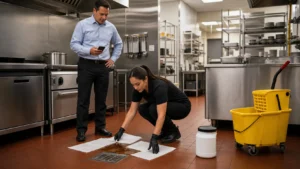
- Look for a visible sheen or dark, worn-looking grease patches
- Ask staff to note any near slip or “skated” steps in the log
- Check mop water at the end of the night and rate how greasy it looks
- Once a week, pull or peek under one or two pieces of equipment
For hoods and filters, use your visual grading scale. During a line-check:
- Look at the filters for light film, moderate buildup, or heavy streaks
- Check the stainless or tile around the hood for splatter
- Glance at nearby walls, ceiling tiles, and make-up air vents for sticky dust
For grease traps and drains, daily notes matter a lot. Have staff record:
- Gurgling drains or slow draining sinks
- Any recurring backup in the same spot
- Odors around the trap lid, mop sink, or floor sinks
Every time a provider such as our team services your trap or interceptor, write down the date, any notes they share, and a simple fullness estimate if you have one. Over time, this shows how quickly your system is loading up with grease.
Turn Observations Into a 30-Day Grease Scorecard
Now you have a pile of notes. To make them useful, turn them into scores. Use a simple 1 to 5 scale for each zone, where 1 is very clean and 5 is serious grease problems. You can rate:
- Floors by area, like line, expo, dish, and under equipment
- Hoods and filters
- Traps and drains
- Any other key zones, such as restrooms if grease odors reach them
At the end of each week, average the scores for each zone. You will start to see patterns, for example:
- Weekend nights raise scores on fryer side floors
- A new menu special with more fried items bumps hood buildup
- Staff changes affect how clean the dish area stays by close
If you work with restaurant cleaning services in Los Angeles or with a grease management provider for traps and lines, add those service dates to your scorecard. You will see how scores change before and after visits, which helps you set the right schedule.
Adjust Cleaning Routines and Service Schedules
Once you have a couple of weeks of scores, it is time to adjust. Start with daily and weekly tweaks. Where scores are high, add focused tasks:
- Extra degreasing near fryers at mid shift
- More frequent hood filter cleaning or swap-outs
- A quick under equipment wipe on your slowest day
- More attention to floor drains during closing
Then look at the whole 30-day picture for monthly or quarterly planning. If your trap notes show frequent odors or slow drains before service visits, that is a sign to adjust your pumping schedule or add support like line jetting. Planned service is far less stressful than emergency calls when the dish pit is backed up or a floor sink overflows at peak time.
Share your audit notes with vendors, including our team at JR Grease Services when we service your used cooking oil, grease traps, interceptors, or kitchen plumbing. When we understand your busy days, menu load, and grease score trends, we can suggest service timing that fits your real-world pattern, not just a generic calendar.
Lock in Your Gains with a Seasonal Grease Playbook
The real power of a 30-day grease audit comes when you repeat it. Running this process each fall before the holiday rush and again in spring before summer traffic helps keep grease under control all year. Each round gets easier, because your team already knows the hotspots and the scoring system.
To make it stick, build a simple Grease Playbook, either in a binder or a shared digital folder. Include:
- Your kitchen hotspot map
- Blank and completed scorecards
- Service records for traps, interceptors, and plumbing
- Health inspection notes related to grease or drains
- Updated cleaning checklists that came out of your last audit
This playbook becomes a training tool for new staff and a quick reference when inspectors, landlords, or corporate leaders ask how you manage grease. Over time, it helps turn grease control from a constant headache into a normal, organized part of running a clean, safe Los Angeles kitchen.
Keep Your Kitchen Safe, Compliant, and Running Smoothly
When you partner with JR Grease Services, you get reliable experts who keep your kitchen clean, safe, and up to code. Our specialized restaurant cleaning services in Los Angeles help prevent costly backups, foul odors, and surprise health code issues. If you are ready to schedule service or have questions about your specific setup, simply contact us and we will help you plan the right solution for your restaurant.