Turn Grease Headaches Into Predictable Monthly Costs
Used cooking oil might feel like a side task, but it quietly touches almost every part of a restaurant. It affects your labor, your storage space, your safety, even how smoothly your kitchen runs during big games and holiday parties. When fall events stack up in Los Angeles, the last thing you want is greasy chaos slowing down the line.
Oil waste removal is not just a cleanup chore; it can create operational costs when it is handled in-house through payroll, plumbing, and surprise problems. With scheduled vendor collection, restaurants can avoid those in-house burdens without paying JR Grease Services a collection charge.
In this guide, we walk through a simple cost comparison model for in-house oil handling versus vendor pickup. We focus on five key areas: labor time, storage space, spill risk, violation exposure, and your total monthly cost. Our goal is to help restaurants across Los Angeles and Southern California turn unpredictable grease headaches into something planned and controlled.
Mapping the True Cost of In-House Oil Handling
In many kitchens, used oil tasks get handed to whoever is closest. It feels free, but it is not.
Hidden labor time often looks like this per shift:
- Waiting for oil to cool
- Carrying heavy containers to the back or outside
- Pouring into drums or makeshift tanks
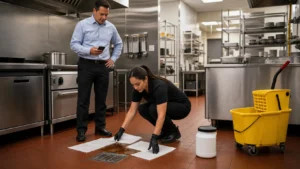
- Wiping spills, mopping floors, and re-cleaning mats
- Writing notes, sending texts, or updating logs
Those small chunks of time stack up across cooks, dishwashers, and managers. Over a busy month, they can turn into many hours of paid labor that is not cooking, serving, or upselling.
There is also the opportunity cost. During peak fall events, staff attention is gold. Every minute spent wrestling a wobbly oil bucket is a minute not turning a table faster, checking in on guests, or pushing dessert and drinks.
Storage space is another silent drain. When you keep oil on-site, it usually steals square footage from:
- Dry storage
- Prep areas
- Extra cold storage
- Back dock loading space
In a warm climate, odors from old oil linger. Even minor drips can attract pests and leave slick spots where staff walk. Crowded back-of-house setups with temporary drums or buckets increase trip and burn risks. One quick slip near a hot fryer is all it takes for an injury and a workers’ comp claim.
Compliance risk is easy to overlook, too. Common in-house missteps include:
- Unsecured containers that can tip over
- Makeshift funnels that splash and overfill
- Pouring oil where it does not belong, which can clog pipes
These habits can lead to sewer blockages and environmental issues. Local agencies can issue fines and require cleanups. On top of that, emergency plumbing calls after a clog are stressful and disruptive. Many operators also forget that inspectors may ask for proof of how oil waste is managed. If everything is informal with no records, it is harder to show you are handling things the right way.
How Professional Vendor Pickup Changes the Equation
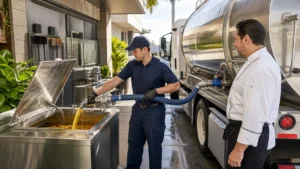
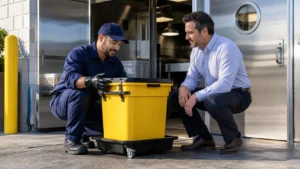
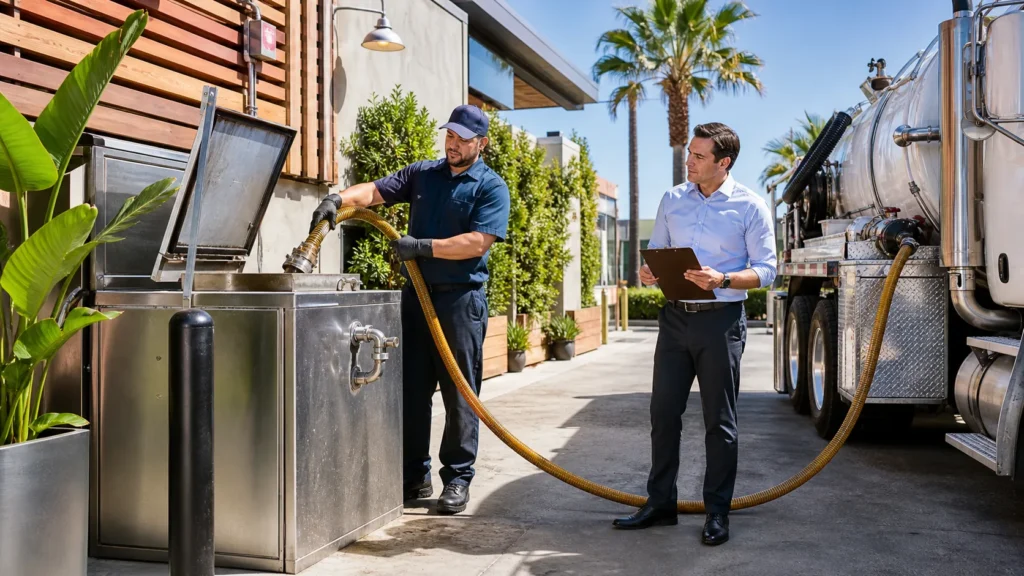
With a professional oil pickup service, the day-to-day work for your team looks very different. Staff focus on cooking and service, then pour used oil into a designated container. That container gets collected on a regular schedule without extra juggling by managers.
Scheduled routes help pickups happen during slower windows, which reduces workflow disruption. During the fall rush, when you are packed with sports fans and holiday groups, this consistency removes one more thing from the mental load. For groups with more than one location, using the same process at each restaurant also cuts training time and confusion for new hires.
Properly sized outdoor or enclosed tanks help with space and safety. A single, secure collection point outside the main kitchen frees up valuable back-of-house areas. Modern containers are built to reduce leaks and spills, and vendor technicians are trained to transfer oil safely. Scheduled collection removes in-house labor, storage, spill, and handling burdens without a collection charge from JR Grease Services.
Cleaner storage has other benefits:
- Fewer odors near entrances and staff walkways
- Less pest interest in your trash and back dock
- Better first impression during surprise health inspections
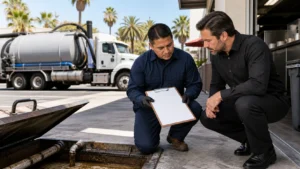
Compliance gets easier, too. Reputable vendors provide service records or manifests for each pickup. Those records help you show that you are following local rules around fats, oils, and grease. When a licensed vendor handles oil waste removal, a big piece of the regulatory and environmental risk shifts off your shoulders.
Building a Simple Cost Comparison Model for Your Restaurant
To see the real difference between in-house handling and vendor pickup, it helps to put everything into a simple model.
Step 1 is to quantify your in-house costs. Start by listing:
- Every role that touches used oil
- Their hourly pay rates
- Average minutes per shift spent on oil tasks
Then layer in monthly costs for cleaning products, spill absorbents, pest control linked to greasy storage areas, and emergency plumbing tied to oil and grease buildup. Do not forget the soft costs, like slower service when a drain backs up, or lost covers when you have to delay seating. Add in any recent fines or citations related to grease or oil.
Step 2 is to account for the value of no-cost used cooking oil collection. JR Grease Services does not charge restaurants for used cooking oil collection, and restaurants producing 100 gallons or more per month may qualify for a rebate. Keep any separately scoped grease trap, interceptor, or plumbing services distinct from used cooking oil collection when reviewing your overall operational costs.
Step 3 is to compare scenarios over a full month. Build a simple two-column table, one for in-house, one for vendor, and include:
- Labor time
- Storage and space impact
- Spill cleanup and safety incidents
- Violation and inspection risk
- Plumbing and emergency calls
Adjust your numbers for the fall spike, when extra events increase oil volume and the chance of backups. It is also smart to run a worst-case scenario. Factor in what one serious spill, overflow, or citation would look like for your business. That single event can wipe out any small savings from handling oil yourself.
Beyond Oil: Adding Grease Traps and Plumbing to Your Model
Oil does not live on its own. The way your team handles it affects your whole drain system. When used oil and food solids slip into sinks and floor drains, they reach grease traps and interceptors faster. During busy months, this can overload them and increase the chance of backups.
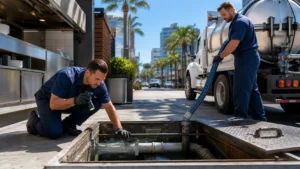
If traps are not cleaned on a steady schedule, heavy volumes during fall events push them past their limit. The result is often a slow drain at first, then a messy backup that hits your kitchen, dish room, or even guest areas. Regular vendor-managed grease trap cleaning keeps plumbing more stable and helps you pass inspections with less stress.
When you look at total monthly cost, include what kitchen drain emergencies really mean:
- After-hours plumbing rates
- Hydro-jetting or line clearing
- Cleanup labor and lost prep time
- Comped meals or refunds
- Negative reviews if guests see or smell a problem
Consistent service for oil collection, grease traps, and kitchen plumbing reduces how often these emergencies happen. That keeps your cash flow steadier and your staff schedule more predictable.
There is also value in having one provider manage all three areas across your locations. Coordinated service plans help prevent missed cleanings and rushed last-minute calls, especially when your attention is pulled toward events and staffing. Over time, steady partnerships can lead to better long-term planning and maintenance suggestions that fit how your specific kitchen runs.
Keep Your Kitchen Compliant With Reliable Oil Waste Removal
If you are ready for a cleaner, safer, and more compliant operation, JR Grease Services is here to help with dependable oil waste removal tailored to your kitchen’s needs. Used cooking oil collection is provided at no cost, and customers who produce 100 gallons or more per month may receive a rebate. We work around your schedule so your team can focus on serving customers while we handle the mess. Reach out today to discuss your volume, pickup frequency, and compliance requirements. Have questions or need a quote fast for separately scoped services? Just contact us and we will respond promptly.