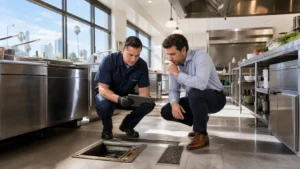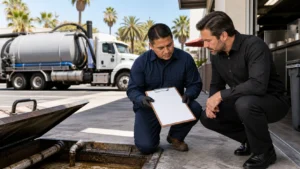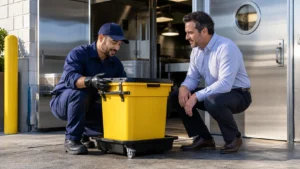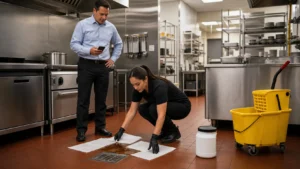
Rethinking Oil Waste Removal for Multi-Location LA Restaurants
Oil waste removal is not the most exciting topic in your day, but it touches almost everything that matters in a restaurant. It affects health inspections, guest experience, surprise emergencies, and how smoothly your kitchen runs during the busiest shifts. For multi-location Los Angeles restaurants, the impact gets even bigger, because one weak spot in the system can drag down the whole brand.
We want to walk through a different way of looking at used cooking oil, grease traps, and kitchen plumbing. Instead of treating them as random problems to fix when something breaks, you can treat them as one connected system across every store. When that system is planned and managed well, it can cut stress, reduce risk, and quietly support your team during those packed late-summer nights.
Turning Oil Waste Into a Competitive Advantage
Multi-location LA operators deal with a special kind of chaos. Each site might have its own layout, its own general manager, and its own habits around oil waste removal. Health inspections are frequent, rules are strict, and city and county agencies pay close attention to how restaurants handle fats, oils, and grease.
That mix often leads to:
- Different standards and vendors at each store
- Confusing service schedules and missed pickups
- Extra pressure during late-summer tourism and event season
When the city is full of visitors and events, your back-of-house cannot afford clogs, overflows, or bad smells leaking into dining rooms or patios. A smarter oil waste plan can help you:
- Cut down on emergency calls
- Keep fry stations and dish areas moving smoothly
- Give staff clear routines they can follow every shift
Our view is simple: used cooking oil, grease traps, and kitchen plumbing should be treated as pieces of one system, not as separate headaches. When those pieces work together, your locations stay more consistent and your brand stays stronger.
The Hidden Costs of Disconnected Oil Waste Practices
When every location does its own thing, trouble builds in the background. One store might have a reliable pickup schedule, while another waits until the oil tank is overflowing. A new manager might not know when the grease trap was last cleaned. Another site might call a random plumber only when there is a flood on the floor.
That kind of patchwork approach often leads to:
- Missed or late pickups
- Surprise grease trap overflows
- Confusion about who is responsible for what
The true cost shows up in places that hurt:
- Emergency plumbing calls when drains back up
- Fines or warnings from inspectors for dirty or overflowing traps
- Staff pulled off prep or service to clean messy spills
- Food delays and partial menu shutdowns when key stations stall
There is also the brand risk. Guests remember strong odors near the host stand, slick spots near the bar hand sink, or a patio that smells like old fryer oil. Those issues are more likely when patios and outdoor seating are packed at the end of summer and grease systems are under heavy load.
Building a Standardized Oil Waste Removal Program
Multi-location operators do better when oil waste removal is handled through a single, standard plan. That does not mean every store is identical, but it does mean the rules are clear and the support is steady.
A solid program usually includes:
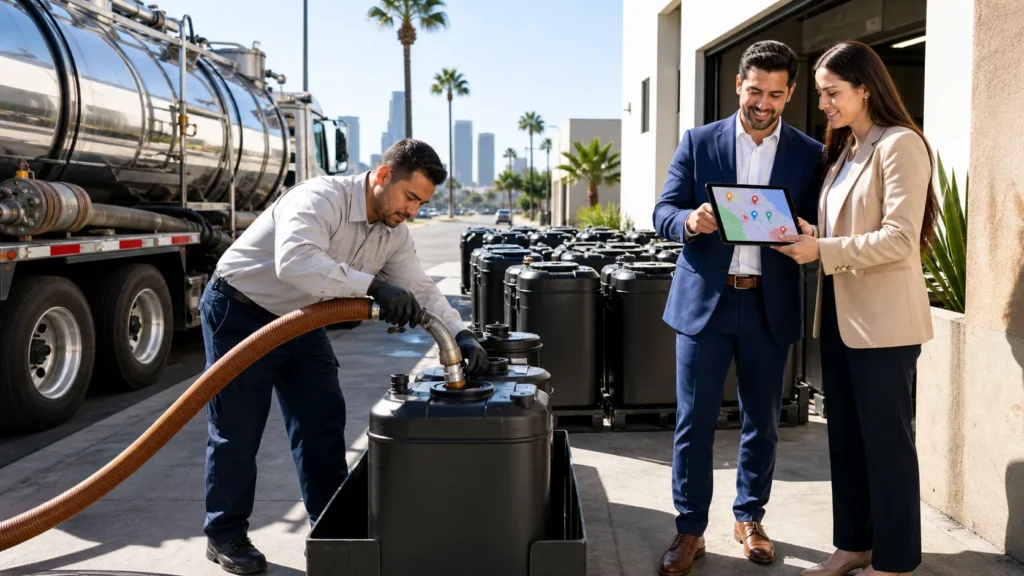
- Consistent service schedules for used cooking oil collection
- Standardized containers and placement so staff know exactly where to go
- Shared written procedures for handling and storing oil at each site
On the staff side, it helps to:
- Assign clear roles for back-of-house teams
- Train every new hire on safe oil handling from day one
- Tie grease trap cleaning schedules to actual volume, not guesswork
Working with one provider for used cooking oil collection, grease trap cleaning, and kitchen plumbing support keeps everyone on the same page. There are fewer gaps between services, less finger-pointing between vendors, and fewer surprises for managers who already have enough to handle.
Compliance, Climate, and LA’s Tightening Regulations
Local agencies care a lot about fats, oils, and grease, because they cause sewer blockages and pollute storm drains when they are not handled correctly. In a large, busy region like Los Angeles, regulators keep a close eye on food businesses.
When oil waste removal is inconsistent, restaurants are more likely to face:
- Extra inspections and follow-up visits
- Citations for dirty or neglected grease traps
- Pressure from landlords and property managers
These problems can hit at the worst times, like right before a big local event or holiday weekend, when guest traffic and media attention are high. A surprise closure or serious violation at one location can ripple across your entire brand.
On the other hand, having your records in order gives you a stronger position. That includes:
- Proof of regular grease trap cleaning
- Documentation of used cooking oil collection
- Clear logs that show you are staying on top of kitchen plumbing issues
This kind of record-keeping does more than satisfy inspectors. It also supports corporate sustainability goals by showing that oil waste is handled responsibly, not just pushed down a drain or left to chance.
Coordinating Service Across Busy Seasonal Peaks
Late summer in LA brings full patios, late hours, extra catering, and plenty of fried food moving out the door. Fryers run harder, oil gets changed more often, and grease traps fill faster. Without planning, that rush can push your systems past their limits.
To stay ahead, operators can:
- Adjust oil pickup frequency by location based on actual volume
- Pre-schedule extra grease trap service before major events and busy periods
- Watch fill levels more closely during peak weeks
Not every store needs the same plan. A small, high-turnover concept in a tight urban space will have different needs than a larger location with more storage and prep room. Schedules can be tuned by:
- Footprint and layout
- Sales volume and menu mix
- Hours of operation and catering load
When one provider coordinates these services, corporate leaders get cleaner reporting. Instead of chasing invoices and logs from different vendors, they can see service history by location and spot patterns before they turn into emergencies.
From Headache to System for LA Restaurant Chains
When oil waste removal is treated as a connected system instead of a set of random problems, everything gets easier. Multi-location LA restaurants that standardize used cooking oil collection, grease trap cleaning, and kitchen plumbing support often see fewer emergencies, fewer inspection surprises, and more predictable operations.
This kind of shift usually starts with a simple audit. Operators and facilities managers look at:
- Which vendors each location uses
- Past incidents like clogs, overflows, and bad inspections
- How service schedules differ from store to store
From there, the goal is to build one clear plan that fits your brand but flexes by location. At JR Grease Services, we help Los Angeles restaurant groups connect the dots between oil, traps, and plumbing so every site is supported by the same strong foundation, no matter how busy the season gets.
Protect Your Kitchen With Reliable Oil Waste Solutions
Keep your operation clean, compliant, and efficient with professional oil waste removal tailored to your schedule. At JR Grease Services, we handle the entire process so you can focus on running your kitchen without worrying about storage, spills, or regulations. Reach out to our team today through our contact page to set up service or request a custom quote.