Stop Costly Shutdowns Before They Start
Kitchen plumbing problems rarely start with a dramatic flood in the middle of dinner rush. They start with small things that are easy to ignore when tickets are flying and staff is stretched. A little backup at the dish pit, a sour smell near the mop sink, a drain that always seems a bit slow. Then one busy Friday, those tiny warnings turn into a full shutdown and a health inspector at the door.
For restaurants, that kind of surprise can mean lost revenue, angry guests, overtime for cleanup, and damage to your reputation. The good news is that most of these emergencies can be avoided when we pay attention to early red flags and bring in professional kitchen plumbing services before things get out of control. When we treat plumbing like part of our daily operations plan, not just a problem to solve in a panic, we protect the whole business.
At JR Grease Services, we work with commercial kitchens every day. We see how small issues in grease traps, interceptors, and lines grow into big failures when they are ignored. Our goal is to help restaurant owners spot problems early so the kitchen keeps running smoothly, especially during busy summer patio and tourism season.
Slow Drains and Odd Smells Are Not “Just Restaurant Life”
Many restaurants accept certain problems as normal. The dish area always smells a bit funky. The prep sink takes a while to clear. The floor drain backs up once in a while. It feels easier to shrug and move on than to stop service and call for help.
Those early signs tell a bigger story. Common warning flags include:
- Sinks or floor drains that empty slowly or bubble
- Recurring standing water on the floor near dish or prep areas
- Gurgling noises when water drains or dish machines cycle
- Persistent sewer or rancid grease odors around dish pits, mop sinks, or restrooms
These issues often point to partial blockages, venting problems, or grease traps and interceptors that are past safe capacity. Left alone, they can quickly turn into backups, overflows, and failed health inspections.
Many kitchens try DIY fixes like plungers, hot water, or consumer drain cleaners. These can damage pipes, harm traps, and cover up the real issue for a short time. Instead, it helps when managers use a simple pre-service checklist, especially in summer when higher volume and heat make odors stronger and strain drains more:
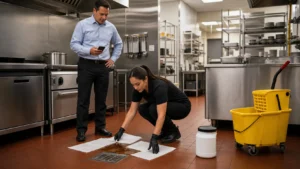
- Walk all kitchen and bar areas and check for standing water
- Run water in each sink and note any slow draining or gurgling
- Smell near floor drains, traps, and interceptors for sewer or grease odors
- Listen to dish machines and disposals for odd sounds or frequent resets
When something feels “off,” that is your chance to act before it becomes an emergency.
Grease Traps That “Seem Fine” but Fail Inspections
Grease traps and interceptors can be tricky. On the surface, everything looks okay. Water still drains, there is no visible overflow, and the kitchen moves on. But inside the trap, fats, oils, grease, and solids can build past safe levels without any obvious sign.
When that happens, the risks stack up:
- Surprise visits from inspectors can turn up neglected traps
- Citations or fines may follow if maintenance is not up to code
- In serious cases, you can face forced closures until problems are fixed
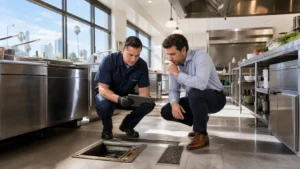
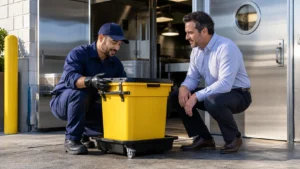
Regular service from professional kitchen plumbing services helps keep grease traps and interceptors in line with local rules. Proper cleaning and maintenance reduce odors, keep lines clear, and protect dish machines and prep sinks from sudden shutdowns.
Summer is especially hard on grease systems. High turnover of fried items and long hours mean more hot oil going down the line. Warm conditions speed up grease breakdown and make smells worse. A steady cleaning schedule with trained grease trap technicians keeps everything working quietly in the background so your team can focus on guests.
Hidden Pipe Stress From Heavy Summer Service
Not every red flag shows itself as a clear clog or overflow. Some problems grow inside the pipes over time, especially during busy seasons. More tickets, more to-go orders, and constant dishwashing keep water and waste flowing almost nonstop.
Older or poorly sloped lines take that abuse the hardest. Food solids, grease, and debris can collect in low spots and corners. This can lead to:
- Micro-cracks or weak spots in pipes
- “Bellies” in the line where waste sits and hardens
- Intermittent blockages that seem to clear, then come back
If your team deals with the same “mystery clogs” every few weeks, or you see frequent pressure drops and have to reset dish machines often, it is usually a sign of a larger issue in the system. Quick plunging or basic snaking might get you through one shift, but it will not fix the cause.
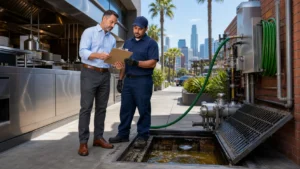
Planning periodic inspections and preventive maintenance with commercial kitchen plumbing services before summer crowds hit helps catch those hidden problems. A checkup early in the season can spot stressed lines and overloaded systems before they fail when you need them most.
When Grease Meets Bones, Bigger Problems Follow
Grease on its own is trouble for plumbing. Add bones, food scraps, and other debris, and things get even worse. Inside pipes and traps, fats, oils, and grease mix with solids and harden into thick, cement-like masses. Once that mix sets up, simple tools are rarely enough to clear it.
A common red flag is how bones and trimmings are handled. When staff tosses them into floor drains, prep sinks, or dish pits instead of proper collection bins, problems are not far behind. This habit:
- Speeds up clogs in lines and traps
- Puts extra strain on dish machines and disposals
- Leads to long-term pipe damage that is hard to see until it is serious
Specialized fat and bone collection, along with safe used cooking oil handling, keeps that heavy mix out of your plumbing. It also supports better compliance with local wastewater rules and helps protect your building’s lines.
Organic waste also breaks down faster in warm conditions, which makes odors stronger and more likely to draw pests. Regular professional collection and cleaning are a key part of staying ready for busy summer traffic and keeping the kitchen pleasant for staff.
Turn Red Flags Into a Summer-Ready Plumbing Plan
When we look at all these warnings together, a pattern appears. Slow drains, strange odors, grease traps that “seem fine,” recurring clogs, and bones or scraps heading down the wrong drains are not just annoyances. They are early alarms. Waiting for a full backup or failed inspection is almost always more stressful and more expensive than dealing with these signs early.
A better approach is to turn those red flags into a simple, clear plan. Restaurant owners and managers can work with professional kitchen plumbing services to build a routine that includes:
- Scheduled grease trap and interceptor cleaning
- Regular inspections of key kitchen lines and fixtures
- Consistent used cooking oil collection and handling
- Proper fat and bone collection to keep solids out of drains
At JR Grease Services, we support commercial kitchens with used cooking oil collection, grease trap and interceptor cleaning, kitchen plumbing, and fat and bone collection. We have been focused on reliable service and regulatory compliance since 1988, and we understand how all these pieces fit together behind the scenes.
When we deal with small issues early, we protect peak-season revenue, keep inspectors satisfied, and give staff a safer, smoother place to work. A calm, flowing kitchen is not an accident. It is the result of paying attention to quiet warnings and treating plumbing as a core part of running a successful restaurant all year long.
Protect Your Kitchen With Reliable Plumbing Help Today
If you are noticing slow drains, frequent clogs, or foul odors in your commercial kitchen, our team at JR Grease Services is ready to help with professional kitchen plumbing services. We focus on fast, thorough solutions that keep your kitchen compliant and running smoothly. Reach out today through our contact us page to schedule service or request a customized quote.