Keep Your Summer Dining Room Fresh and Fly-Free
Strong food, happy guests, and steady tickets can make late spring and summer your best time of year. But when the heat kicks up, grease, food scraps, and dirty drains can start to work against you fast. One day the dining room smells fine, and the next, there is a sour, sewer-like odor and fruit flies circling the bar.
Those smells and tiny pests are not just annoying. They can lead to guest complaints, bad online reviews, and attention from the health inspector. In a warm city like Los Angeles, where kitchens stay busy and days are long, smart grease trap cleaning services, used cooking oil collection, and plumbing care are the first line of defense against summer odor and fly problems.
How Summer Heat Supercharges Grease Trap Odors
Heat speeds everything up in a grease trap. Inside that dark box under the sink or out in the parking lot, fats, oils, and grease, known as FOG, sit with food particles and water. As temperatures rise, bacteria break down that mix faster and push out stronger gases. Those gases travel up through pipes and vents and can spread into prep areas, restrooms, and the dining room.
Warmer conditions also change how grease behaves inside your plumbing. Grease that would normally stay thicker starts to liquefy and flow farther down the line. Later, when it cools a bit in deeper pipes, it sticks to the pipe walls and builds up layer after layer. That buildup can lead to:
- Slow drains at dish stations and prep sinks
- Gurgling sounds in floor sinks and mop sinks
- Backups that push smelly water up onto floors
On top of that, summer often brings:
- Longer open hours
- More patio and bar traffic
- Higher volume from catering and events
All of that puts more food waste and FOG into your system. The result is simple: the time between safe cleanings gets shorter. A trap that felt fine on a cooler schedule can suddenly start to smell days or weeks earlier. That is why a predictable, warm-season pumping routine is so important for odor control.
Fruit Flies, Drain Flies, and Hidden Breeding Zones
When odors get stronger, fruit flies and drain flies usually are not far behind. These pests love warm, damp, dirty spots. They do not need a lot of space or food. Just a thin layer of greasy, rotting residue can support a large population.
Common fly hot spots in hot months include:
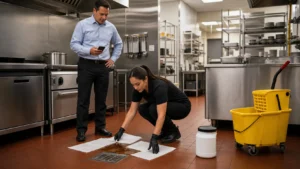
- Floor drains and floor sinks under cook lines and bar stations
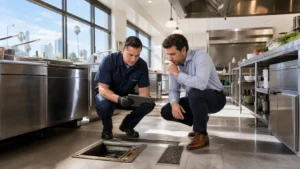
- Grease traps and the surrounding floor area
- Mop sinks and dirty mop buckets
- Gaps under and behind fryers, grills, and dish machines
- Areas where used cooking oil has splashed or dripped
The fruit fly life cycle is fast in warm conditions. Eggs can hatch in a short time, and larvae feed on the slime inside drains, around rubber gaskets, and anywhere organic matter collects. That means a small missed spill or a sticky drain cover can turn into clouds of flies in just a few days.
Grease and waste mismanagement feed this cycle. Some common triggers are:
- Skipping regular grease trap service until there is a backup
- Letting used cooking oil drip or splash around barrels or containers
- Rinsing pans loaded with FOG straight into sinks and floor drains
- Ignoring slimy buildup inside floor sinks and underneath grates
Sprays or foggers may knock down adults for a short time, but if the food source in the drains and traps stays in place, the flies keep coming back. The real fix starts with better trap, drain, and oil handling habits.
Best Practices to Control Heat, Odor, and Grease Buildup
Odor and fly prevention works best when your team and your service provider are in sync, especially from late spring through early fall. In warm seasons, most kitchens benefit from a tighter schedule for professional grease trap cleaning services so solids and FOG do not have time to reach odor-causing levels.
Along with that schedule, daily and weekly staff habits make a big difference. Simple routines include:
- Scraping plates and pans into the trash before washing
- Using sink strainers and emptying them often
- Wiping greasy pans with a paper towel before rinsing
- Keeping floor sink grates, bar drains, and covers clean
- Reporting slow drains or standing water right away
Operational tweaks for hot months can also help keep smells and flies out of view:
- Check that grease trap and floor sink covers sit flat and are sealed correctly
- Keep dish, bar, and prep areas well ventilated to move humid, smelly air away
- Store mop heads so they dry fully between uses, not soaking in dirty water
- Train staff to notice warning signs like sewer odors, bubbling drains, or dark slime on grates
These steps support the work your service provider does and help your trap stay cleaner between visits.
Partnering with Pros for Summer-Ready Kitchen Plumbing
Summer odor and fly control is a team effort. A professional partner can help you connect grease trap care, used cooking oil handling, and kitchen plumbing support into a single plan that fits how your restaurant operates.
A good service team can:
- Look at your trap size, menu, and daily volume and suggest the right cleaning frequency
- Help you understand local rules around FOG handling and disposal
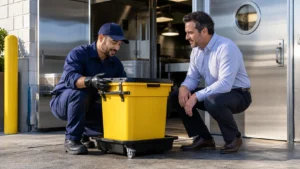
- Coordinate used cooking oil collection so containers stay clean and do not attract pests
- Support kitchen plumbing so buildups and partial blockages are found early
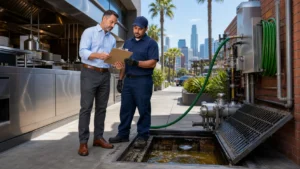
For restaurants in the Los Angeles area, our crew at JR Grease Services focuses on these connected needs. We provide grease trap cleaning, used cooking oil collection, kitchen plumbing support, and fat and bone waste collection so all those systems work together instead of against you. In the summer rush, that kind of coordination means fewer emergencies and fewer surprise odors drifting into your dining room.
Regular, thorough trap maintenance clears out the heavy sludge at the bottom of the trap, not just a layer of floating grease. That deeper cleaning helps cut down on the gases that cause that rotten egg smell and keeps the whole system flowing more smoothly.
Build Your Summer Odor and Fly Prevention Plan Now
The best time to stop greasy smells and fruit flies is before the first big weekend rush of late spring and summer. Restaurant owners and kitchen managers should take a close look at grease trap service, oil collection, and drain care routines and adjust them for the hotter months ahead.
A simple, written checklist can keep everyone on the same page. It might include:
- Target frequency for grease trap cleaning services in warmer months
- Set days for used cooking oil pickups
- Planned plumbing inspections or line cleaning before peak holidays or events
- Daily and weekly cleaning tasks, with names assigned to each shift
When your team knows what to watch for, and your service partner knows your schedule and volume, your kitchen is better prepared for busy days and warm nights. With the right plan in place, your patio can smell like good food, not sewer gas, and your guests can enjoy their meals without swatting at fruit flies.
Protect Your Kitchen With Reliable Grease Trap Cleaning
Keep your kitchen compliant and running smoothly by scheduling professional grease trap cleaning services with JR Grease Services today. We work around your hours to minimize downtime while helping you avoid costly backups, fines, and emergency repairs. If you are ready to set up service or have questions about your system, contact us and we will help you choose the right cleaning schedule for your operation.