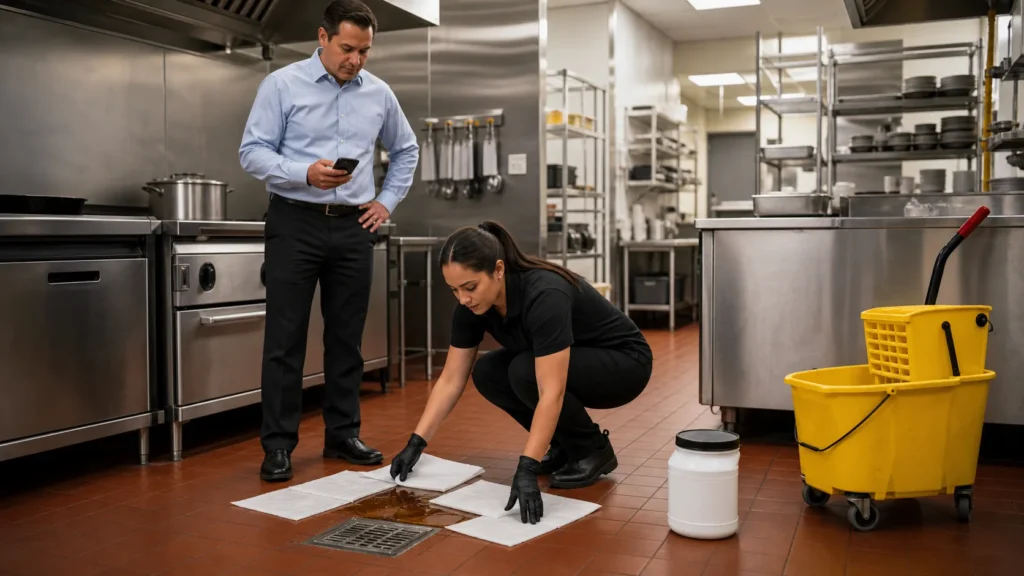
Keeping grease under control is a daily job in any busy kitchen. When that grease suddenly backs up or overflows during service, it can turn a normal shift into a fast-moving emergency that puts food, staff, and guests at risk. A simple, clear plan for those first minutes can keep a grease problem from becoming a full shutdown.
In this article, we walk through what to do when a grease issue hits at the worst time, how to spot trouble before it blows up, what you should never try on your own, and how to turn near misses into better maintenance. At JR Grease Services, we see what goes wrong behind the scenes, and we want to help your team stay ready, calm, and safe.
When Grease Hits the Fan During a Dinner Rush
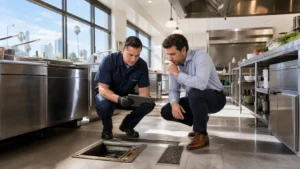
The line is full, tickets are stacking up, and then it happens. A sink stops draining, a floor drain starts bubbling, or greasy water slides across the tile toward the cook line. In a few minutes, a small clog can become a slip hazard, a food safety issue, and a health inspector’s worst nightmare.
Those first 15 to 30 minutes matter. Smart, steady choices can be the difference between:
- A short delay at one station or a full kitchen shutdown
- A quick cleanup or long-term plumbing damage
- A quiet fix or a complaint that spreads to the front of house
An Emergency Grease Response Plan gives your team simple steps to follow when they feel that first moment of panic. Instead of arguing over what to do or trying risky shortcuts, everyone knows how to protect people, food, and equipment while you wait for a plumber or grease removal partner.
Spot the Red Flags Before a Grease Disaster Escalates
Grease rarely causes trouble out of nowhere. It usually gives early warning signs, especially as the calendar fills up with back-to-school events, sports nights, and holiday parties.
Common red flags include:
- Sinks that drain slower than normal
- Foul, greasy odors coming from floor drains
- Gurgling sounds when dish machines or sinks drain
- Water or gray liquid backing up at low spots in the floor
- Clogs that keep returning in the same area
These warning signs may show up more often when:
- Takeout and delivery orders jump for game nights
- Catering ramps up before fall holidays
- You add new menu items that use more frying oil
When managers pay attention to these signals, they can arrange grease trap cleaning, line jetting, or used cooking oil collection before a late-night emergency forces a shutdown. Early action usually means less mess, less stress, and fewer surprises during rush periods.
Safe Stopgap Moves to Protect Your Kitchen and Staff
While you wait for a plumber or a grease service technician, the goal is simple: keep people safe, avoid more damage, and keep as much of the kitchen running as you can.
Start with safety:
- Turn off problem sinks, dish machines, or prep sinks feeding the clogged line
- Put clear “Do Not Use” or “Out of Order” signs on those fixtures
- Move food prep and dry goods away from any standing water or grease
- Place “Wet Floor” signs and, if you have them, non-slip mats around the area
Then focus on simple, safe stopgap steps:
- Empty sink strainers of food scraps and solids into the trash
- Use mop buckets, squeegees, and wet vacs to pick up surface water only, not to push grease toward other drains
- Shift dishwashing or pot washing to another station that drains well, if possible
- Keep staff clear of any area where wastewater could splash onto clean dishes or food
Cleaning is still important, but it must be done the right way. It is fine to:
- Wipe up grease on floors and equipment with approved degreasers
- Bag oily rags and paper towels and place them in solid waste
- Keep used cooking oil going into your normal collection bin, not sinks or floor drains
These small moves keep things under control without forcing grease deeper into your plumbing.
Grease Removal Tactics You Must Never Try Yourself
When drains back up, it is tempting to try “quick fixes.” Many of these do more harm than good, both for your pipes and for your health inspection record.
Avoid these risky shortcuts:
- Pouring chemical drain openers into kitchen lines or grease traps
- Running very hot water to try to “melt” clogs
- Jamming homemade tools, coat hangers, or sharp rods into drains or trap covers
- Opening or pumping your own grease trap without proper training and equipment
Chemical drain cleaners can react with grease, create fumes, and damage pipes and components. Hot water may push soft grease farther down the line, where it cools and hardens into a worse blockage. Makeshift tools can crack pipes, break trap parts, or even injure staff.
Never empty a grease trap into:
- Dumpsters or trash compactors
- Parking lots or alleys
- Storm drains, gutters, or outside trenches
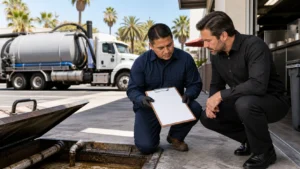
That kind of dumping can lead to big fines, pest problems, bad smells outside your business, and complaints from neighbors. It can also put your health inspection score at risk and may break service agreements on used cooking oil. Only trained, licensed professionals should open, pump, and service grease traps or haul away used oil.
Building a Grease Response Toolkit for Your Team
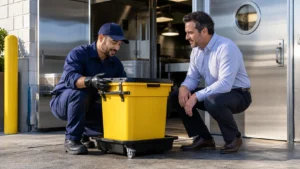
A small, well-stocked kit can turn chaos into a controlled situation. Store it where managers and leads can grab it fast.
Helpful items include:
- High-visibility “Out of Order” and “Wet Floor” signs
- Absorbent pads or granules for greasy spills
- Heavy-duty gloves and eye protection
- Floor squeegees, mops, buckets, and extra liners
- Flashlights or headlamps to see under sinks and low areas
- A printed contact sheet for your plumber and grease removal partner
Along with the kit, create a one-page emergency checklist. Keep it simple:
- Who to notify first and how to reach them
- Which valves, breakers, or water lines to shut off
- How to mark affected sinks, drains, and zones
- What photos or notes to take for maintenance records
- Where to log the incident for follow-up planning
Every fall, when business gears up with sports nights and holiday bookings, hold a short training refresher. Make sure new and seasonal staff know:
- Where the kit lives
- What they can safely do and what they must never do
- Which manager to tell as soon as they see early warning signs
Clear roles reduce panic and stop small issues from being ignored until they turn into emergencies.
Turn Emergencies Into Preventable Maintenance Wins
A grease emergency is stressful, but it can also be a wake-up call that helps you avoid the next one. Within a day or two, sit down with your managers and leads and walk through what happened. Look for root causes like infrequent trap cleaning, line buildup, heavy used cooking oil volume, or staff habits that overload drains.
From there, build or update a maintenance plan that includes:
- Routine grease trap cleaning based on your actual flow and menu
- Regular kitchen line jetting before your busiest seasons
- Reliable used cooking oil collection on a set schedule
- Periodic checks of problem spots like long horizontal runs or low floor drains
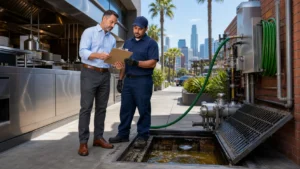
A steady maintenance calendar, paired with a trusted grease removal partner, cuts down on surprise clogs, late-night calls, and downtime during rush shifts. It also gives your team peace of mind, knowing that the systems under their feet are being taken care of.
As you step into the busy fall and holiday period, use this time to formalize your Emergency Grease Response Plan. Review your trap capacity, service frequency, and known risk points. With clear steps, trained staff, and consistent support behind you, the next “near miss” can be the last one your kitchen has to fight through.
Protect Your Kitchen With Reliable Grease Solutions Today
If you are ready to prevent backups, foul odors, and costly repairs, we can help keep your system running smoothly with expert grease removal. At JR Grease Services, we work around your schedule to minimize downtime and keep you in compliance. Reach out to our team today through our contact page so we can assess your needs and set up dependable service.