Protecting Your Parking Lot and Your Brand
Grease and oil do not stop at the kitchen door. They follow cars, carts, and staff shoes right out into the parking lot. When guests pull in and see dark stains, slick spots, and they smell old grease, they start forming an opinion about food safety and cleanliness before they ever see the dining room.
For busy restaurants, cafes, and food businesses, the parking lot and drive-thru are really part of the kitchen. Delivery trucks, used cooking oil containers, and trash runs all move through these areas. If grease removal outside is not part of the plan, small spills turn into long-term stains, odors, and safety problems.
As a company that spends every day dealing with grease inside commercial kitchens, we know that control has to stretch all the way to the curb. In this article, we will walk through why parking lot grease matters, smart ways to remove it, how summer conditions make problems worse, and how to tie your indoor and outdoor plans together.
Why Parking Lot Grease Is a Hidden Liability
Grease on concrete might look like just an ugly stain, but it creates real risk for your business. One quick step on a slick patch is all it takes for a guest or team member to lose their footing.
Here is what lingering grease outside can lead to:
- Higher slip-and-fall risk in walkways, drive-thru lanes, and curb ramps
- More tracking of grease back into the building on shoes and wheels
- Odors that linger around entrances, patios, and pickup areas
- Slow damage to concrete and striping, which raises repair costs
Grease and oil outside can also move into your plumbing and stormwater systems. When rain washes oily residue toward drains, it does not just disappear. That material can:
- Settle in drain lines and add to buildup that leads to clogs
- Make its way into storm drains and local waterways
- Cycle back toward kitchen plumbing problems and stress grease traps and interceptors
There is also the regulatory and environmental side. Many cities focus closely on what enters storm drains. If grease and oil are allowed to wash off your lot and into the street, you can face complaints, clean-up orders, or penalties that are much more painful than routine maintenance.
On top of all that, a dirty parking lot sends the wrong signal. You might invest in training your staff, keeping your kitchen spotless, and building a great menu. But if a guest has to step over slick stains by the front door or pickup window, the first impression is already damaged.
Core Grease Removal Tactics for Busy Parking Lots
Keeping a commercial parking lot clean is not about one big project. It is about regular, smart grease removal that fits how kitchens actually run every day.
A strong basic plan usually includes:
- Routine dry cleanup
- Targeted degreaser use
- Professional hot water pressure washing
- Support from grease-focused specialists
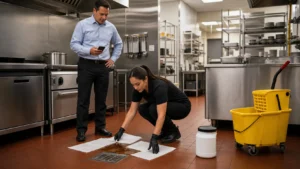
Start with dry methods whenever you can. Sweeping, scraping, and using absorbent granules on fresh spills keeps most of the grease out of storm drains. Dry cleanup is especially helpful around:
- Dumpster pads and trash corrals
- Used oil storage areas
- Loading docks and delivery zones
For stubborn stains, a food-service-safe degreaser that works on concrete is a helpful tool. A simple process looks like this:
1. Mark off the area so cars and people stay clear.
2. Apply degreaser to the stain and let it sit for the recommended time.
3. Agitate with a stiff brush where safe.
4. Rinse while keeping water away from open storm drains as much as possible.
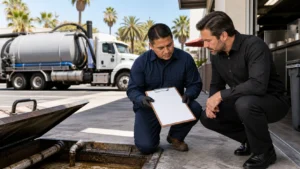
Over time, most high-traffic lots need professional pressure washing. Hot water is key for breaking up grease. The right provider will control the water flow, use the correct pressure so you do not damage the surface, and manage wash water so it does not carry grease and cleaners into the storm system.
It also helps to work with specialists who understand restaurant operations. Cleaning needs to be planned around your rush periods, opening and closing times, and delivery windows so the lot stays safe without slowing down business.
Seasonal Strategies for Summer Grease Buildup
In warm climates like ours, summer is prime time for parking lot problems. Higher temperatures soften grease and oil so they spread faster, sink deeper into concrete, and put out stronger odors.
Heat and busy summer traffic create a few extra challenges:
- Grease stains can set in more quickly under strong sun.
- Odors near outdoor seating and pickup spots get worse.
- Staff and delivery crews may track more residue on shoes and wheels.
Summer storms add another layer. When a fast rain hits, it washes loose grease across the surface and right toward drains and landscaping. That runoff can leave slippery areas in new spots and move pollution where you do not want it.
To stay ahead of this, it helps to:
- Walk high-traffic areas before and after big storms and clean fresh spots fast
- Increase the frequency of exterior inspections and quick cleanups
- Plan seasonal pressure washing for drive-thru lanes, pickup zones, and entrances
This is also a good time to tighten up how used cooking oil is handled inside. Clean, dry transfer paths, tightly sealed containers, and fast spill response in the back-of-house all cut down on how much grease ever makes it outside during the busy warm months.
Integrating Grease Control From Kitchen to Curb
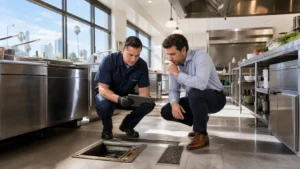
The best way to keep your lot clean is to connect what happens inside the kitchen to what happens outside. When used cooking oil is collected on time, grease traps and interceptors are working well, and plumbing is cared for, you lower the chance of messy overflows that end up at the loading dock or beyond.
A few simple habits can tie it all together:
- Add exterior checks to closing and opening routines
- Include notes about grease spots, odors, or slick areas in daily logs
- Train staff on where to find spill kits, absorbents, and brooms
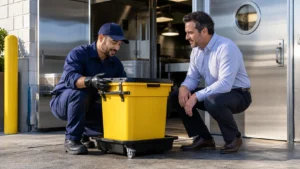
Design also matters. Whenever possible, place oil bins, waste containers, and fat and bone collection points on sturdy, cleanable pads, not bare soil or broken pavement. Keep basic spill tools nearby so small problems are handled quickly, not left for the next shift.
Managers can also track patterns. If the same corner of the lot keeps getting stained or the same drain smells like grease, that is helpful information. Sharing these details with grease service partners allows cleaning schedules and techniques to be adjusted around your real-world trouble spots.
Putting a Grease Defense Plan in Place
Grease outside may feel less urgent than what happens on the cook line, but it touches safety, plumbing, compliance, and your brand every single day. By the time there is a slip-and-fall, a strong odor complaint, or a drain issue, the problem has usually been building for a while.
A simple starting plan can be as basic as:
- Walk the lot and delivery areas with fresh eyes
- Mark the worst grease stains, slick spots, and odor zones
- Set a routine for dry cleanup and spot treatment
- Plan regular professional cleaning that fits your traffic patterns
At JR Grease Services, we work with commercial kitchens on used cooking oil collection, grease trap and interceptor cleaning, kitchen plumbing, and fat and bone collection. That experience gives us a full view of how grease moves through a property, from fryer to parking lot. When indoor and outdoor grease control work together, the whole site becomes safer, cleaner, and more welcoming for everyone who visits or works there.
Protect Your Kitchen With Reliable Grease Trap Service
If you are ready to prevent backups, foul odors, and surprise shutdowns, we are here to help. Our expert grease removal services keep your traps and interceptors performing the way they should, so you can focus on running your kitchen. Reach out to JR Grease Services today to schedule service tailored to your operation. For questions or to request a quote, simply contact us.